June 12, 2026
How do Autistic children experience learning challenges?

How does Autism affect learning?
Autism does not affect all areas of a child’s learning. It is not a generalized learning disability, and many autistic children are highly capable learners. Some may even demonstrate exceptional strengths in areas of personal interest. Many autistic children show remarkable abilities in remembering details, acquiring in-depth knowledge, or mastering specific skills from an early age.
However, the primary challenge for autistic children is not learning itself, but rather learning through social interaction. Research has shown that autistic children process and prioritize social information differently. From an early age, they may pay less attention to faces, eye contact, speech, and the actions of others, while showing greater interest in objects, patterns, details, or topics that capture their attention.
As a result, autistic children may miss some of the natural learning opportunities that typically occur through interactions with people around them. While typically developing children learn extensively through observation, imitation, and social engagement, autistic children may focus on different aspects of their environment and learn in different ways.
The role of sensory processing in learning
Many autistic children also experience differences in their responses to sensory stimuli, such as sounds, lights, tastes, smells, or tactile sensations. These sensory processing differences can directly affect their participation in learning and social activities.
For example, a child who is highly sensitive to noise may avoid crowded or noisy environments, reducing opportunities for play and peer interaction. Conversely, a child who is particularly drawn to a specific sensory experience may become deeply absorbed in that activity and pay less attention to what is happening around them.
A preference for familiarity and routine

Another characteristic that can influence learning is a preference for familiarity, predictability, and repetition. While many children are naturally attracted to novelty, autistic children may feel more comfortable and secure with familiar activities, objects, and routines.
This cautious approach toward new experiences can sometimes limit opportunities to explore and develop new skills. At the same time, it can also be a strength. A strong focus on a limited number of interests often allows autistic children to develop extensive knowledge and expertise in areas they are passionate about.
Challenges with sustaining attention

Many autistic children experience difficulties with selective attention—focusing on a task while filtering out irrelevant distractions. In classroom settings or group activities, unrelated sounds, visual stimuli, or movements can make it difficult for them to maintain attention on the primary activity.
When faced with multiple sources of information simultaneously, children may feel confused, overwhelmed, or stressed. This can affect not only learning outcomes but also their ability to participate in educational and social experiences.
A scientific perspective

From a scientific perspective, the core characteristics of autism reflect differences in the way children process social information, regulate attention, and respond to their environment. These differences may reduce the amount of social learning experiences children engage in during early development, which can in turn influence the later development of communication and social interaction skills.
Good news for parents
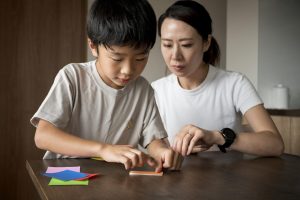
Despite these challenges, autistic children have significant potential for learning and development when provided with appropriate support. Early intervention, specialized educational environments, and interaction opportunities tailored to each child’s individual needs can help children engage more actively in learning, strengthen communication and social skills, and gradually expand their ability to participate meaningfully in everyday life.
Reference Source:
Implementing the Group-Based Early Start Denver Model for Preschoolers with Autism
Authors: Giacomo Vivanti, Ed Duncan, Geraldine Dawson, and Sally J. Rogers